


Molded Fiber Pulp: Ask for the Data Sheet, Ash Included
Nov 20, 2026
Leave a message

Molded fiber pulp is quoted by grade and by blend, yet most buyers see only a unit price and a lead time. The grade sets the fiber quality, and the blend sets the mineral and fiber mix, so the two numbers decide both the performance and the cost. A buyer who asks for the fiber data sheet with ash and moisture figures before the order learns more in one page than a stack of quotes ever shows. This page walks the data points a buyer should request, starting with the molded pulp packaging primer; for the raw material itself, pulp as a raw material explains how the fiber is measured before it is molded.

The data sheet beats the price tag
A quote built on price alone leaves the fiber unnamed, and the unnamed fiber is the part that fails in the field. Ash content, moisture content and blend ratio are the three figures that turn a vague pulp tray into a spec the line can repeat, so the data sheet belongs in the quote before the deposit. A buyer can read the design guide for the wall and rib rules, yet the material numbers sit upstream of any drawing. A buyer who compares two shops on unit price alone compares two unknown recipes, because the same part can ship from a stiff virgin blend or a soft recycled one and look identical on the desk. Ask for the sheet first, because the sheet is the only document that names what the part is made of.
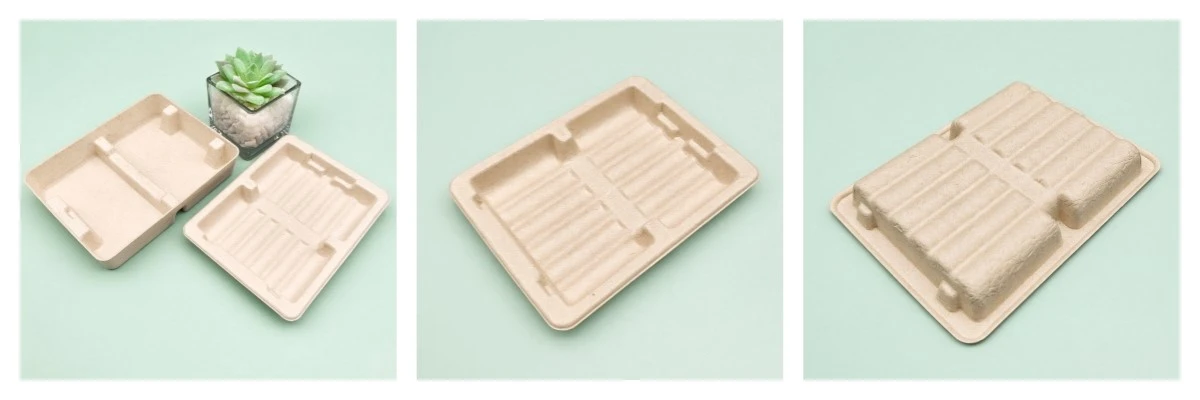
A complete sheet also keeps the second source honest, because a buyer who holds the spec can take it to a second shop and get a real comparison instead of a second mystery. The sheet turns a single supplier's word into a market price, and that shift is the one that protects the budget on every reorder. Where the part is custom, the sheet is the bridge from sample to production, because the number that proved the sample is the number the tool must repeat.
Ash content: the filler that stiffens the part
Ash is what remains after the pulp is burned off, and that residue is mostly the mineral filler added to the mix. A higher ash figure means more filler and less fiber, which stiffens the wall at lower cost but lowers the wet strength and the tear resistance. A lower ash figure means more fiber, which costs more but holds up under a wet load and a rough drop. The number is measured by heating a sample to a fixed temperature and weighing what stays, and a buyer should see the method, not just the percentage. A quote that states the ash band tells the buyer whether the part was built to a price or to a performance line, and the difference shows up as a corner that cracks or a wall that holds.
The ash figure also points at recyclability and at how the part behaves in a kiln or a compactor, because a high filler load burns off as inert dust while a high fiber load carries more energy. A buyer who sets the ash target by the end use, not by the lowest quote, avoids a part that is cheap to mold and costly to dispose of. Name the application when you ask for the band, since the right number for a dry shelf tray is the wrong number for a wet chilled pack, and the supplier needs the use to pick the filler. The right ash is the one the use names, not the one the quote hides, and color tracks the blend too, because recycled fiber runs grey while virgin runs pale, so the shade is a rough read of the mix before the sheet confirms it.

Moisture: the hidden weight and the warp
The part leaves the tool wet and dries to an equilibrium moisture that tracks the room it sits in, so the mass on the scale is not the mass that ships. A part that reads light in the plant can read heavy in a humid warehouse, and the extra water is weight the buyer pays to freight and risk the buyer owns. Moisture also drives warp: a wet edge dries last and curls, so a stack that looked flat on the bench can bow by the time it reaches the line. The wet press versus dry press route sets the starting density, yet the final moisture is the figure the buyer should pin down before transit. Ask for the moisture band at pack, because a number written on the sheet is the only defense against a warp claim at the dock.
Moisture is measured by weighing a sample, drying it to constant mass, and weighing again, so the figure is a simple mass loss that any incoming inspection can repeat. A buyer who writes the method and the ceiling into the purchase order turns a vague dry claim into a line a receiver can check, and the check is what stops a wet batch from reaching the line. Ask for the reading on the cert that ships with the load, not a number read once in the plant, because a single plant reading misses the humidity the truck added on the way.

Blend: virgin, recycled and agricultural residue
The blend is the recipe of fibers in the mix, and it sets the length distribution that decides strength, the color the buyer sees, and the food-contact path the part can take. Virgin kraft brings long, strong fibers and a clean look; recycled fiber cuts cost and carbon but carries shorter strands and more contaminants; agricultural residue such as bagasse adds stiffness and a story the buyer can name. The film-free barrier route shows how the same blend reaches a food-contact path without a film, yet the blend itself is the first thing a buyer should name. A blend left blank on the quote is a blend chosen by the shop, not the buyer, and the shop reaches for the cheap mix when price is the only number on the page.
Fiber length distribution, read through a freeness or a CSF number, predicts how the blend will hold a thin wall and a deep draw, because long fibers bridge the span and short fibers pack the surface. A buyer who asks for that number reads strength before the drop test, and the number is the one a supplier can fake least. Bagasse brings shorter, stiffer fibers than virgin kraft, so a blend that leans on residue trades some draw depth for lower cost and a story the buyer can name on the box.

Read the quote as a blend spec
A molded fiber pulp quote that names the grade and the blend is a real quote; one that names a price and nothing about the fiber hides the recipe behind a number. For China molded fiber pulp and Customized molded fiber pulp, the China molded pulp capacity backs most supply, and a roster of molded fiber pulp manufacturers usually blends in molded fiber pulp packaging suppliers who broker across mills, while the makers that cut their own steel sit with their own recipe. The product form also varies: molded pulp corner protectors and molded pulp inserts ship as different geometries from the same base material, so the blend that suits a corner guard may not suit a fragile insert. A buyer who reads the quote as a blend spec sees the fiber, the filler and the origin on one page, and that page is the one that keeps the run honest. A showcase reel of molded fiber pulp parts shows the range leaving the tool, useful for judging geometry before the order.
A named grade is the buyer's anchor against a silent substitution, because a grade that means the same thing to both sides leaves no room for the shop to swap the recipe when pulp prices move. A quote that reads standard pulp with no grade behind it is a quote the supplier can fill with whatever is cheap that week, and the buyer owns the result. Ask for the grade name and the spec it maps to, since a name without a spec is a label, not a control.

Composite example (a blend of real projects, not one client). Two programs ordered the same tray shape, and both saw a unit price. One bought on price and the blend stayed blank, so the shop ran a high-ash recycled mix that warped in a humid DC and the claim came back as bowed stacks. The other asked for the data sheet first, locked an ash band and a moisture ceiling, and the same shape shipped flat through the same route. The shop that quoted low finished high, and the data sheet was the paper that showed why. The first program also paid a reclaim on the bowed stock and a replacement that missed the launch window, so the saving on the sheet was a fraction of the cost the missing data sheet caused. The second program spent a few days lining up the numbers and shipped on time with a flat, repeatable part.
Frequently asked questions
Q: How do I set the ash band for a molded fiber pulp order?
A: Specify a band rather than a single point, because a range lets the shop hit performance without chasing an exact figure that costs more to hold. Aim the band at the job: a dry, light part can carry more filler, while a wet or dropped part needs more fiber and a lower ash. Ask the supplier for the method behind the number, since a percentage without a test method is a guess dressed as a fact. The band you write into the data sheet is the band the production run will repeat, so set it before the tool is cut.
Q: How does moisture affect molded fiber pulp in transit?
A: Moisture tracks the humidity of the warehouse and the truck, so a part that left the plant dry can absorb water and gain mass before it reaches the line. The extra water adds freight weight the buyer pays for and raises the warp risk as one edge dries faster than the other. Pin the moisture ceiling at pack and check it against the route, because a humid lane needs a tighter band than a dry one. A sheet that names the ceiling is the only proof the part left within spec, and the proof is what settles a warp dispute. Where the route runs cold, add the low temperature to the band, because a part that flexes warm can snap chilled, and the ceiling that fits a dock may fail a truck.
Q: Which blend suits food contact for molded fiber pulp?
A: A blend that meets food contact depends on the fiber origin and the barrier route, not on the word pulp alone, so name the fibers before you claim the path. Virgin or well-sorted recycled fiber with a film-free barrier can meet the contact rules, while an unknown mix may not and the buyer owns the risk. Ask for the barrier route in writing, because a blend without a documented path is a blend the inspector will question. The wine bottle insert fit test shows how a documented part behaves under drop, and the same discipline applies to the blend. Where the part meets heat or oil, name the condition, because a barrier that holds a dry fill may not hold a hot one, and the written route is the only line the inspector trusts.
Q: How do I read a molded fiber pulp quote?
A: Read the quote as a material spec, not a price tag, because the unit price hides the fiber that decides the run. A real quote names the grade, the ash band, the moisture ceiling and the blend, while a price-only quote leaves those lines blank for the shop to fill. Compare two quotes on the data sheet first, then on the number, because the cheaper sheet may be the dearer part. Keep the data sheet with the order, because the sheet is the record that links the part back to its recipe. Where two shops quote the same shape, line the sheets up side by side and read the fiber first, because the number that differs is the number that will surprise you on the line.
Q: What data points should the fiber data sheet list?
A: The sheet should list ash content with the test method, moisture content at pack, and the blend by fiber type and percentage, because those three are the core of the material. Add the grade name, the food-contact route if claimed, and the supplier's fiber origin, since a sheet without origin is a sheet without accountability. Ask for the numbers before the deposit, because a sheet that arrives after the run is a record, not a control. A complete sheet turns a vague order into a spec the line can repeat and the buyer can defend. Where the part carries a marketing claim, attach the claim to the line it rests on, because a claim with no fiber origin behind it is a claim the regulator will ask you to prove.
A self-check before you publish
Before the order goes out, run a short check on the data the supplier returned. The list below is the one a buyer should keep on the quote, because a data point the buyer never confirmed is a data point the shop filled alone.
First, confirm the data sheet names ash content with a test method, because a percentage without a method is a number nobody can repeat.
Second, confirm the moisture ceiling is pinned to the transit route, because a band set for a dry lane fails a humid one.
Third, confirm the blend lists each fiber type and its share, because a blank blend is a recipe the shop picked.
Fourth, confirm the grade and the food-contact route are written where claimed, because a verbal path is not a document.
Fifth, confirm the supplier discloses fiber origin, because origin is the line that makes the rest accountable.
Sixth, confirm the data sheet travels with the purchase order, because a sheet filed away is a control that never ran.
Share your carton size and monthly volume, and we'll work the nesting and freight numbers.
Our address
No. 51, Hongfu North Road, Wanjiang Street, Dongguan City, Guangdong Province, China
Phone Number
+86 13790319071
sales@welike-moldedpulp.com
Send Inquiry