


Enviro packaging redefining modern design
Jul 23, 2026
Leave a message
Let's be completely honest with each other for a second. When most people hear the term "molded pulp," their brains instantly teleport to a classic, deeply familiar visual: the trusty, rugged egg carton protecting our breakfast, or that heavy-duty, honest piece of packaging keeping industrial machinery and household goods safe from the brutal realities of global transit.
Let's clear the air right out of the gate: we are not here to diss traditional dry-press molded pulp. While high-precision wet-press gets plenty of glitzy attention for high-end electronics and luxury cosmetics, traditional dry-press manufacturing is the absolute backbone of the entire industry. It's rugged, incredibly cost-effective, boasts massive production efficiency, and provides unmatched, heavy-duty shock absorption for everyday transport. Without the classic dry-press structure-from heavy industrial cushioning to those legendary egg trays keeping our groceries intact-the modern logistics world would literally grind to a halt. Dry-press isn't "low-end"-it's honest, structural heavy-lifting at its absolute finest!
Even better? That very same material integrity is now breaking out of the shipping warehouse and crashing the gates of high-end retail flagships, avant-garde interior architecture, and elite gallery installations.
The core revelation here isn't just that molded pulp is a brilliant sustainable substitute for plastics-it's that it possesses a raw, unpretentious material honesty, formidable structural mechanics, and a tactile richness that modern design has been secretly craving for decades.
The Material Science of "Wabi-Sabi"-Why Creators Are Falling Head over Heels

To truly understand why molded pulp is making waves in architecture and fine art, we have to look past the surface and dive straight into the nerdy intersection of material science and tactile psychology.
Take the microscopic architecture of the fibers themselves. Whether you're working with unbleached virgin plant fibers, agricultural bagasse (sugarcane waste), or post-consumer recycled paper, these materials carry what I like to call a natural "fiber fingerprint." Unlike the dead, sterile, mirror-flat perfection of injection-molded plastics or virgin polymers, pulp fibers interact with light through natural microscopic scattering. When photons hit the uneven, porous surface of a pulp structure, they don't just bounce off-they diffuse. This creates a deep, tactile warmth and an authentic Wabi-Sabi aesthetic that no synthetic mold can fake.
Then, there's the chromatic evolution. We have officially moved far beyond industrial utility gray. By cleverly integrating non-toxic mineral dyes, botanical extracts, or specialized color-masterbatch pulping techniques right at the slurry stage, manufacturers can achieve rich, sophisticated earth tones. We're talking about deep charcoal, warm terracotta, moody slate, and muted sage green that run all the way through the material.
Looking across the broad spectrum of manufacturing methods, whether it's the high-speed, heavy-duty volume of traditional dry-pressing or the high-precision, smooth-skinned finish of wet-pressing, the sheer geometric versatility of pulp completely shatters the myth that paper-based materials can't look architectural and high-end.
Crossing the Line-Where Pulp is Breaking All the Rules
We aren't just talking about weird, abstract sculptures collecting dust in a gallery corner. Molded pulp is actively bridging the gap between heavy-duty structural engineering and delicate spatial design across several booming sectors.
In high-end retail architecture and pop-up spaces, zero-waste display platforms are taking over. High-end cosmetic and fashion brands are increasingly sick of building extravagant acrylic or virgin-resin display fixtures that get thrown in a dumpster after a three-day event. By capitalizing on the high structural rigidity and load-bearing capacity of dense pulp molds, designers are engineering modular, interlocking display pedestals that look like brutalist concrete monuments but are 100% biodegradable. Ephemeral architecture is following suit, with pop-up retail shops turning to custom-molded pulp panels that can handle heavy product loads throughout a high-traffic exhibition, and then be pulverized, slurried, and re-routed straight back into the production loop without generating a single gram of landfill waste.
Moving indoors, interior architecture and acoustic engineering are seeing massive shifts. Because molded pulp maintains a naturally porous, multi-layered fibrous matrix, its physical structure boasts an exceptional Noise Reduction Coefficient (NRC). Sound waves enter the microscopic interstitial spaces of the pulp and get trapped, converting acoustic energy into microscopic friction and heat. Architects are now carving thick, multi-cavity wall panels that function as heavy-duty acoustic dampening tiles for recording studios and minimalist corporate offices, combining raw sculptural art with elite sound control. Alongside this, precision-pressed pulp components are becoming the new darling of lighting designers, casting soft, moody, shadow-rich illumination that feels entirely alive compared to cold glass or spun aluminum.
In contemporary art, form-versus-gravity studies are pushing boundaries through explorations in mass and void. Avant-garde artists are grouping, stacking, and casting different geometric iterations-honeycomb cells, deep-drawn cylindrical cavities, and asymmetrical structural ribs-to explore the physical tension between mass production and individual, handmade texture. It's a brilliant conceptual commentary on modern consumerism disguised as stunning material philosophy.
The Business Case-When Industrial Supply Meets Brand Storytelling
Why should commercial brands and procurement managers actually care about this radical design shift? Because in today's market, sustainability is no longer just a backend compliance checkbox hidden away in an annual CSR report; it is front-facing brand capital.
When premium technology brands, high-end consumer hardware companies, and luxury cosmetic giants adopt custom-designed pulp packaging and spatial display fixtures, they are doing something genius: they are translating their internal green supply chain metrics into a tangible, high-end visual language.
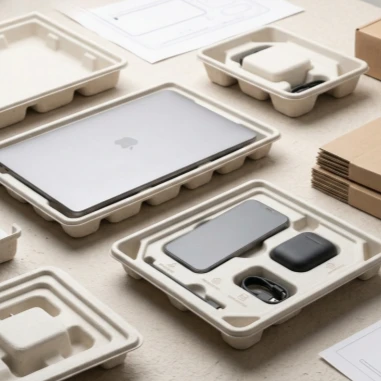
When a customer opens a box or walks into a flagship store and touches a meticulously engineered, beautifully textured pulp tray, they aren't just seeing "recycled paper"-they are feeling the brand's core values right at their fingertips. It shifts the corporate economic narrative from "disposal and compliance costs" to "creative material investment," proving to the world that strict ecological responsibility and cutting-edge aesthetic luxury can drive mutual profitability.
Let's Build Something Extraordinary Together
Who knew that the humble, hardworking cousin of the egg carton could clean up this nicely, throw on a tailored suit, and completely crash the fine-art and architectural scene?
If you are ready to take molded pulp beyond the factory floor and bring boundary-insane installations, custom furniture pieces, or next-generation packaging solutions to life for your brand or commercial project, get in touch with our team today to explore what's possible.
Send Inquiry