






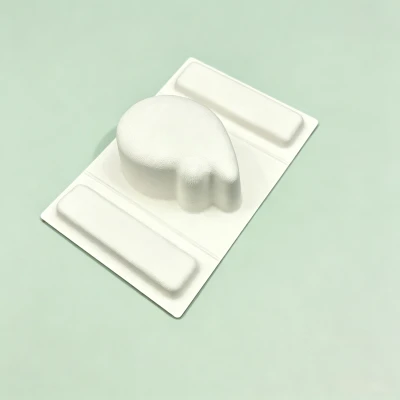
Customized Recycled Packaging For Beauty Device
Description
When we look at the evolution of industrial design, how a product is packaged has become nearly as important as the product itself. For decades, the electronics and precision instrument industries have relied heavily on traditional materials like Expanded Polyethylene (EPE) and Expanded Polystyrene (EPS) foam. These petroleum-based materials set the gold standard for shock absorption, providing a reliable safety net for high-value components traveling through unpredictable global supply chains. However, as market demands shift and sustainability becomes a core pillar of corporate identity, manufacturers are actively exploring complementary alternatives. Today, Molded Pulp Packaging-once associated primarily with basic agricultural trays-has matured into a highly engineered, sophisticated solution. Rather than completely displacing traditional materials overnight, recycle packaging is carving out its own vital space, offering an elegant, high-performance option for brands looking to diversify their packaging portfolio.
1. Navigating the Modern Instrument Packaging Landscape
Packaging a delicate digital multimeter, a high-end audio device, or a complex laboratory instrument presents a unique set of engineering challenges. It isn't just about containment; it is about creating a controlled micro-environment.
The Technical Requirements
Precision instruments are vulnerable to several structural and environmental factors during transit:
Kinetic Impact: Drops and continuous vibration during multi-modal transport can cause mechanical fatigue or misalign sensitive optical and electronic alignments.
Electrostatic Management: Friction during handling can generate static charges, requiring packaging materials to work alongside anti-static measures to protect internal microprocessors.
Atmospheric Fluctuations: Changes in humidity during sea or air freight can lead to moisture retention, making moisture resistance a key requirement for internal housing.
Balancing Compliance and Utility
Traditional foams remain highly effective for heavy-duty, high-impact industrial cushioning. At the same time, global regulatory frameworks-such as Europe's REACH and RoHS directives-are encouraging companies to incorporate a higher percentage of bio-based, easily recyclable materials into their supply chains. The goal for modern packaging engineers is no longer about finding a single "perfect" material, but rather about selecting the right tool for the specific product tier and regional market.


2. A Tale of Two Technologies: Dry-Press and Wet-Press Processes
To understand where molded pulp fits into your product line, it helps to look at the two primary manufacturing methods. Both have distinct structural profiles, and neither should be overlooked-they simply serve different operational needs.
The Pragmatic Protector: Dry-Press
The dry-press process involves forming the fiber mat on a mold and transferring it straight to a drying oven without secondary compression. This creates a thicker, more porous structure with excellent long-travel cushioning properties. Far from being an outdated method, dry-press pulp is an incredibly cost-effective and structurally resilient choice. For heavy industrial instruments, backend components, or larger diagnostic hardware, it provides heavy-duty impact resistance that performs beautifully under high weight loads.
The Premium Presenter: Wet-Press
For consumer-facing electronics or compact, high-precision instruments, the wet-press process is often preferred. Here, the damp fiber preform is dried directly inside a heated metal die under intense hydraulic pressure. This flashes off the moisture while locking the fibers into an incredibly dense, smooth wall with crisp, tight radiuses. It offers a clean, dust-free aesthetic that aligns seamlessly with modern industrial design and premium unboxing expectations.
The Production Cycle: From Slurry to Structure
The transformation from raw fiber to a finished geometric tray relies on a highly controlled industrial sequence:
Pulping and Conditioning: Raw plant fibers or recycled materials are mechanical dispersed in water. At this stage, specialized functional additives-such as eco-friendly sizing agents for moisture resistance or compounding agents for specialized surface properties-are integrated into the slurry.
Vacuum Forming: Custom-engineered mesh molds are submerged into the slurry. A vacuum system draws out the water, leaving a uniform layer of interwoven fibers held against the mold's profile.
Thermoforming and Curing: The wet fiber mat is transferred to a matching heated die. Under a calibrated balance of heat (typically between 180°C and 220°C) and mechanical force, the remaining water is evacuated, and natural hydrogen bonds lock the fibers into a rigid, dimensionally stable form.
Finishing: Trays undergo precision edge-trimming, quality inspections, and optional post-processing like custom brand embossing or debossing.
3. Engineering Protection Through Geometry
A common misconception is that paper-based structures are inherently less protective than synthetic foams. While foam relies on the natural elasticity of trapped gases within plastic cells, molded pulp achieves its protective qualities through structural geometry.
Precision Fit and Component Isolation
Because wet-press molds are CNC-machined to exacting specifications, they can be designed to match the complex CAD geometry of your instruments with remarkable accuracy. Dedicated cavities isolate the main unit from its accessories-such as power adapters, test leads, and probes. By ensuring each component has a secure, form-fitting pocket, internal shifting is minimized, which significantly reduces the risk of surface abrasion and cosmetic scratching.
Engineered Crush Zones
When a packaged instrument experiences a drop, the molded pulp structure manages the kinetic energy through calculated deformation. Packaging engineers design specific reinforcement ribs to provide vertical rigidity for daily stacking loads. Alongside these ribs, cushioning cavities act as intentional structural "crush zones." Upon high-velocity impact, these geometric shapes buckle in a controlled manner, absorbing and dissipating the shock energy before it can reach the sensitive electronic or optical components inside.
The Efficiency Value: Nesting Capabilities
Beyond physical protection, molded pulp introduces significant logistical efficiencies through its ability to nest. Unlike block-form foam packaging, empty molded pulp trays are designed with precise draft angles that allow them to stack tightly inside one another.


4. Compliance, Practicality, and the Bottom Line
Transitioning or diversifying your packaging strategy is ultimately a business decision that must balance environmental stewardship with fiscal reality.
Meeting Global Standards
For electronics manufacturers targeting international markets, molded pulp offers a streamlined path toward meeting sustainability goals and regulatory expectations:
Circular Resource Integration: It utilizes renewable, responsibly sourced plant fibers or recycled paper streams.
Streamlined End-of-Life: The trays fit seamlessly into standard municipal paper recycling infrastructure, making it easy for end-users to dispose of the entire packaging bundle responsibly.
Natural Degradation: Should the material bypass the recycling stream, it breaks down naturally over time without contributing to persistent synthetic micro-particles.
A Balanced Financial Approach
In the early days of eco-friendly packaging, adopting sustainable materials often required paying a premium. However, as production technologies have scaled and automated manufacturing lines have optimized energy usage, the cost curve has normalized. When evaluating the total cost of ownership-including reduced warehouse space requirements, optimized freight density, and alignment with regional environmental tax incentives-molded pulp stands as a highly competitive, pragmatic choice for modern instrument lines.
The Strategic Perspective
Selecting packaging materials is no longer a binary choice between pure utility and environmental idealism. Every material has its proper place in industrial manufacturing. While traditional foams continue to serve vital roles in heavy-duty industrial cushioning, molded pulp has proven itself to be a sophisticated, commercially viable partner for precision electronics.
Integrating molded pulp into your product presentation provides a clean, well-engineered unboxing experience that speaks to technical precision and thoughtful design. It allows brands to protect their valuable hardware while subtly signaling a commitment to sustainable progress-one well-designed layer at a time.
Hot Tags: customized recycled packaging for beauty device, China customized recycled packaging for beauty device manufacturers, suppliers, biodegradable computer packaging, eco packaging, molded fiber compartment inserts, molded packaging, moulded paper, recycled packaging materials
You Might Also Like

Eco-Friendly Packaging Materials for Electronics | W...

Design Recyclable Dry Pressed Global Packaging for C...

Custom Biodegradable Molded Pulp Packaging for Phone...

Wholesale Thermoformed Molded Fiber Products | Custo...

Recyclable Molded Pulp Packaging for Electronics | W...

High-Performance waste paper pulp molded packaging S...
Why Choose WEILAI?

Excellent Manufacturing capabilities
WEILAI has a complete production line with over 80 sets of manufacturing equipment and an annual production capacity exceeding 6,000 tons. We can flexibly meet the increasing demand for sustainable packaging. We can provide customized packaging solution services for global customers and also carry out large-scale innovative production.

Ability to Design and Develop Prototypes Independently
Equipped with a professional R&D team, our engineers design 3D drawings tailored to product characteristics and customer needs, ensuring the eco-friendly packaging is both aesthetic and protective. With our own workshops and equipment, we independently develop molded pulp packaging molds, with an annual output exceeding 1,000 sets.

Offer Professional Services
With over 20 years of experience in biodegradable packaging, We consistently refine our team capabilities and production processes. We have partnered with more than 2,000 customers so far, and we keep elevating our services through their valuable feedback.

Cost-Effective and Stable-Quality
We strike the perfect balance between highly competitive pricing and outstanding quality. Every pulp molding product will be inspected by our Quality Control Department before shipping out. We make sure customers can receive high quality and satisfying pulp packaging.
How To Turn Your Customized Packaging Into Reality?
- Step 1--Consultation and Conception
- Step 2--Design
- Step 3--Prototype Test
- Step 4--Feedback And Confirmation
- Step 5--Production And Delivery
-
 Consultation and Conception
Our experienced team understand customers' needs on packaging quickly. And we will assess according to the characteristics of products. Considering both protection and aesthetics, we try our best to meet every unique needs.
-
 Design
Our engineers will design 3D drawing based on the products and specific requirements.
-
 Prototype Test
We will make a series of prototype tools for testing to ensure that they meet the requirements of our customer.
-
 Feedback And Confirmation
We collect customer feedback and conduct design refinements to enhance the biodegradable packaging's functionality--all adjustments and the final plan will be confirmed by you to fully align with your needs.
-
 Production And Delivery
Complete the production order according to customer's requirements of quantity, time and quality. And finally deliver the customized eco packaging to the designated place of receipt through logistics.
Send Inquiry